



A “waterproof” label doesn’t guarantee a necklace is ready for every pool. If you’re searching for pool safe tarnish free necklaces, the most useful clues are the metal, the finish and the care advice, not just the wording on the product page. Chlorine can affect some jewellery materials, while a gold-coloured coating may need thoughtful care to maintain its appearance.
It makes sense to want a necklace that fits your routine without guessing what a water-resistant claim really means. There are no official standards for “waterproof” or “tarnish-free” jewellery, so it pays to look beyond the label. This guide explains how pool chemicals may affect different materials, what to check in a necklace’s specifications and how to build a care routine around your swimming habits.
We’ll compare practical material and finish considerations, including stainless steel and PVD gold plating, and cover details such as clasps and post-swim rinsing. Tegan Rae jewellery is one option to assess by its specific materials and care guidance, not as a blanket guarantee for pool wear. With a little clarity, you can choose a piece that suits your style and how you spend your days.
Key Takeaways
- Assess pool safe tarnish free necklaces by their specific materials, finish and pool-use guidance, rather than relying on broad marketing terms alone.
- Compare the base metal and coating together, then check whether the clasp and other components have separate care requirements.
- Use a simple checklist to compare product-specific pool advice with general claims such as “waterproof” or “tarnish-free”.
- Follow the maker’s care instructions. If pool-exposure guidance is unclear, remove your necklace before swimming.
- Explore Tegan Rae’s stainless steel and 18K PVD gold-plated options by checking the care information for each piece, rather than assuming the range is pool-safe.
What Does Pool-Safe Mean for a Tarnish-Free Necklace?
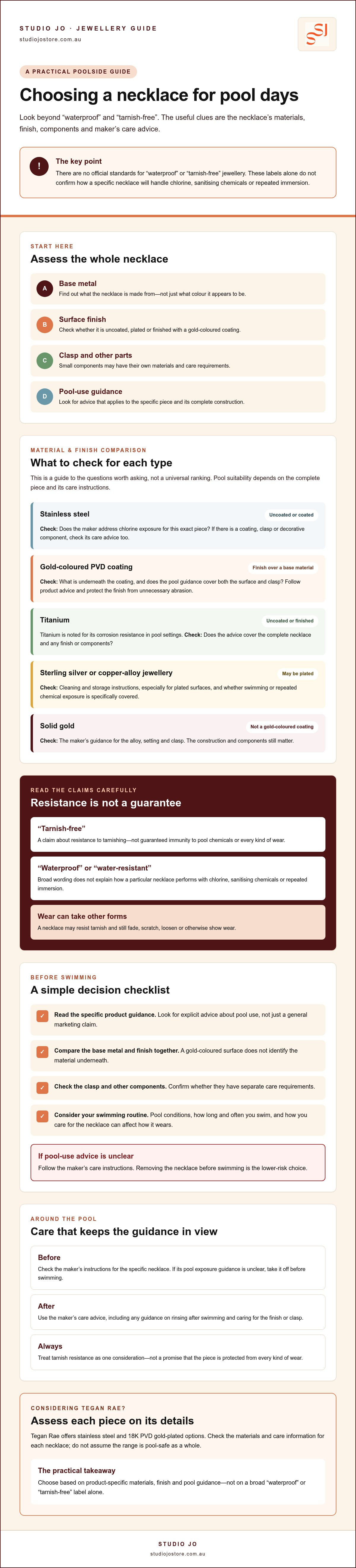
Pool-suitable jewellery is a piece with maker guidance that supports the intended pool exposure. It isn’t a universal certification or a promise that the necklace is damage-proof. There’s no official standard for “waterproof” or “tarnish-free” jewellery, so these labels don’t automatically confirm that a necklace can handle chlorine, sanitising chemicals or repeated immersion.
When comparing pool safe tarnish free necklaces, look at the whole piece: its base metal, surface finish, joins and clasp. Pool conditions, how long and often you swim, and how you care for the necklace can all affect how it wears. Tarnish resistance is only one part of the picture.
Can chlorine affect necklaces marketed as waterproof?
It can, depending on the materials and conditions. Pool chemicals may interact differently with a base metal, a gold-coloured coating and smaller components such as clasps. That doesn’t mean every swim will cause visible damage, but a broad “waterproof” claim alone doesn’t tell you how a particular necklace performs with pool exposure. Check the maker’s care guidance for the specific piece before swimming. If it’s unclear, removing the necklace is the lower-risk choice.
What does tarnish-free actually tell you?
“Tarnish-free” describes a claimed resistance to tarnishing, not guaranteed immunity to pool chemicals or every kind of wear. Corrosion-resistant noble metals help explain why some materials resist oxidation, but jewellery may use alloys, coatings or multiple components, each with different care needs. A necklace can resist tarnish and still fade, scratch, loosen or otherwise show wear.
That distinction helps you read product descriptions with a more discerning eye. Look for explicit pool-use instructions rather than treating “water-resistant” or “tarnish-free” as a chlorine guarantee. As you compare product details and care directions, focus on what the maker says about the specific piece, not just on broad waterproof-jewellery claims.
Which Necklace Materials and Finishes Handle Poolside Wear Best?
Start with the base material, then check any coating and the smaller components. A gold-coloured surface doesn’t tell you what sits underneath it, and a durable metal alone doesn’t confirm that the finished necklace is suitable for chlorinated water. The right choice depends on the complete construction, the maker’s care instructions and how you plan to wear it.
Use this comparison as a starting point, not a universal ranking. For example, titanium is noted for its corrosion resistance in pool settings; SwimSwam discusses the resistance of titanium in the pool environment. A particular necklace still needs product-specific care guidance.
| Base material | Finish | Likely care needs | Pool-specific evidence to check |
|---|---|---|---|
| Stainless steel | Uncoated or coated | Follow the maker’s instructions. Check for coating or component care. | Does the maker address chlorine exposure for this exact piece? |
| Stainless steel | Gold-coloured PVD coating | Protect the surface from unnecessary abrasion and follow product guidance. | Is pool use addressed, including care for the coating and clasp? |
| Titanium | Uncoated or finished | Check the full product specification and any finish-specific advice. | Does the guidance cover the complete necklace, not just the metal? |
| Sterling silver or copper-alloy jewellery | May be uncoated or plated | Check cleaning and storage instructions, especially for plated surfaces. | Are swimming and repeated chemical exposure specifically covered? |
| Solid gold | Solid gold, rather than a gold-coloured coating | Follow the maker’s care guidance. Construction and components still matter. | Does the advice apply to the alloy, setting and clasp of this piece? |
Is stainless steel a good choice for swimming-pool necklaces?
Stainless steel is a material to consider, but it isn’t proof that every necklace suits chlorinated water. Check the exact specification, including the clasp and any decorative parts, then read the maker’s pool and care guidance. A stainless steel jewellery guide can help you understand material distinctions, but product-specific instructions should guide how you wear a particular piece.
How should you assess gold-coloured and PVD-coated necklaces?
Solid gold is gold alloy throughout. A gold-coloured necklace may instead have a different base metal beneath its surface finish. PVD describes a coating process, not solid gold, and its performance depends on the product’s construction and care. Don’t assume chlorine resistance unless the maker confirms it for that piece. A dedicated 18K gold PVD finish guide can help you understand what details to check.
If you’re comparing everyday styles, you can explore Tegan Rae jewellery at Studio Jo and review the material and care details for each piece. Range-level descriptions aren’t a blanket assurance that a necklace is suitable for pool wear.
How to Compare Pool Safe Tarnish Free Necklaces Before Buying
A clear product listing should help you understand what a necklace is made from and how it’s meant to be cared for. When comparing pool safe tarnish free necklaces, check each product in the same order rather than relying on a reassuring label. The key principle is simple: assess the complete necklace, not only its chain material.
Use this quick check before buying:
- Confirm the base material. Look for a named metal, not just “premium” or “durable”.
- Identify the finish. Check whether the piece is solid metal, plated or coated, and what material sits beneath the surface.
- Check every component. Look for details about the clasp, pendant, links and other findings.
- Read the care instructions. See whether they mention swimming, pool water or chlorine specifically.
- Match the guidance to your routine. A necklace intended for occasional wear may need different care from one you hope to wear during regular swims.
A general reference such as the Jewelry Metals Buying Guide can help you understand common jewellery metals. Use it to build context, then rely on the maker’s advice for the specific piece and its intended use.
What product details should you check on a necklace listing?
Look for the named base metal, any plating or coating, the clasp material and clear care guidance. Then check whether the maker addresses pool water specifically. “Water-resistant” or “tarnish-free” alone doesn’t explain how the necklace responds to chlorinated water. If the listing leaves out a material or care detail, ask the maker before buying rather than filling in the gaps yourself.
Do clasps, jump rings and pendants matter too?
Yes. A necklace can include a chain, clasp, jump rings and pendant that don’t all share the same material or finish. This also applies if you customise the fit with extenders; styling advice from Adjustable Chains by Grace Blooms notes that any extra findings must align with how you plan to wear the piece. A sturdy-looking chain doesn’t confirm that the rest of the piece is suited to pool exposure. Check the full construction, including decorative details and joins, and ask whether the care advice applies to every component. Small parts count, too.
If the maker doesn’t give a clear answer about swimming, treat that as a cue to remove the necklace before getting in. This avoids exposure you can’t confidently assess, while still letting you enjoy the piece poolside or wear it afterwards.
How to Wear and Care for a Necklace Around the Pool
A little care can help keep a favourite necklace looking its best, but the maker’s instructions should always come first. Jewellery materials and finishes vary, so don’t assume a routine that suits one piece is right for another. If the care guidance doesn’t mention pool exposure, taking your necklace off before swimming is the lower-risk option.
Should you take a necklace off before swimming?
Remove a necklace if its maker hasn’t confirmed it’s suitable for pool water. A brief splash and repeated or prolonged immersion aren’t necessarily the same kind of exposure, and your swimming routine matters. If a piece is delicate, meaningful or difficult to replace, leaving it safely off is a simple way to avoid unnecessary risk. Convenience is appealing, but clear product guidance should shape your choice.
If the maker permits swimming in the necklace, follow their care advice after each swim. Where those instructions allow, rinse it with fresh water to help remove pool residue, then dry it gently with a soft cloth. Skip rinsing if the product guidance advises against it or specifies another cleaning method.
- Check the maker’s instructions before wearing the necklace in the pool.
- After swimming, rinse and dry it only if the care guidance allows.
- Inspect the clasp and finish for changes before wearing it again.
What about sunscreen, sweat and poolside storage?
Sunscreen, sweat, lotions and other personal-care products can leave residue on jewellery. Follow the maker’s cleaning instructions, and avoid harsh cleaners or abrasive cloths unless they’re specifically recommended. If you remove your necklace poolside, place it somewhere dry and store it separately from other pieces. This helps reduce tangling and contact that could scratch a finish.
Keep your routine simple: avoid letting personal-care products build up on the necklace, remove it when pool guidance is unclear, and clean it only as directed. These habits are useful whether you’re comparing pool safe tarnish free necklaces or caring for a piece you already own.
Looking for an everyday necklace to assess by its material and care details? Explore Tegan Rae jewellery at Studio Jo, then check the guidance for the specific piece before swimming.
Choosing a Tarnish-Resistant Necklace from Tegan Rae
Studio Jo features Tegan Rae jewellery, an Australian label with everyday pieces described as water-resistant and tarnish-free. The range includes stainless steel and 18K PVD gold-plated jewellery, materials worth considering as you compare pool safe tarnish free necklaces. However, range-level descriptions don’t confirm that every necklace is suitable for chlorinated water. Check the details and care instructions for the exact piece before deciding to swim in it.
What can shoppers consider in the Tegan Rae range?
Start with the stated material. Stainless steel and 18K PVD gold plating involve different material and finish considerations, but neither description alone guarantees pool suitability. Look at how the individual necklace is constructed, including its clasp and pendant, and read its specific care guidance. An everyday design may suit a regular wardrobe, but that doesn’t necessarily mean the piece is intended for repeated pool exposure.
Think of product descriptions as a useful starting point, not a substitute for pool-specific advice. If a listing explains the material but says nothing about chlorine or swimming, don’t assume that “water-resistant” covers those conditions. The same applies to “tarnish-free”: it doesn’t answer every question about finish wear or repeated immersion.
How can you make a confident final choice?
Match the necklace’s materials and stated care instructions to your routine. If you swim occasionally, you may be comfortable removing a piece before getting in. If swimming is a regular part of your week and you want to wear a necklace in the water, seek clear, product-specific guidance first. Contact the retailer or maker if it isn’t provided, and ask directly whether the exact necklace is suitable for pool exposure and how it should be cared for afterwards.
- Check the product details: confirm the base material, finish and components.
- Read the care advice: look for explicit guidance about swimming or pool water.
- Ask if unsure: don’t treat a general water-resistant claim as confirmation of chlorine suitability.
A considered choice comes down to more than a finish or label. Compare the details for the specific Tegan Rae necklace, confirm its care guidance, then choose a piece that fits your style and swimming habits. If pool exposure isn’t clearly addressed, taking it off before you swim remains the more cautious option.
Choose a Necklace That Fits Your Swim Routine
Finding pool safe tarnish free necklaces starts with looking past broad labels. “Water-resistant” and “tarnish-free” don’t automatically confirm that a piece is suitable for chlorine. Check the full construction, including the finish and clasp, and look for care advice that specifically covers pool exposure. If that guidance is missing, removing your necklace before swimming is the more cautious choice.
Tegan Rae jewellery is described as water-resistant and designed for everyday wear, with stainless steel and 18K PVD gold-plated pieces in the range. These details can help you compare materials, but they aren’t a blanket pool-safe guarantee. Check the specifications and care advice for the exact necklace, then consider how often you swim and whether you’re comfortable taking it off.
Ready to compare the material and care details for yourself? Explore Tegan Rae jewellery at Studio Jo and choose a piece that feels right for your style and routine. Check the product-specific guidance before swimming so you can make an informed choice about wearing it in and out of the water.
Frequently Asked Questions
Can I wear a tarnish-free necklace in a chlorine pool?
Not necessarily. “Tarnish-free” describes a claimed resistance to tarnishing, but it doesn’t confirm that the necklace can withstand chlorine or repeated immersion. Pool chemicals may affect the base metal, coating or individual components differently, depending on the piece and exposure. Check the maker’s care instructions for that specific necklace. If pool use isn’t clearly addressed, take it off before swimming to reduce the risk of damage.
Are stainless steel necklaces safe to wear in a swimming pool?
Stainless steel may be a material to consider, but the name alone doesn’t confirm that a complete necklace is suitable for chlorinated water. Construction, any surface coating, the clasp and other components matter too. Look for product-specific pool guidance, not just a general claim about the metal. If you’re unsure, follow the maker’s care advice or remove the necklace before swimming. This is especially sensible for repeated pool exposure.
Does 18K PVD gold plating tarnish in pool water?
It’s not possible to promise how a particular 18K PVD gold-plated necklace will respond to pool water without its product specifications and care guidance. PVD describes a coating process, while the gold-coloured surface is not solid gold throughout. Chlorine exposure may affect a finish or other components depending on the necklace and conditions. Check whether the maker explicitly permits swimming in that piece, and follow its care instructions.
What should I look for in a pool-safe necklace?
Check the full product details: named base material, plating or coating, clasp and other components, plus the maker’s care instructions. Look for explicit guidance about swimming or pool water. Broad phrases such as “water-resistant” or “tarnish-free” don’t necessarily explain how a necklace handles chlorine. If pool exposure isn’t mentioned or the specifications are vague, ask the retailer or maker before buying rather than assuming the piece is suitable.
Should I take my necklace off before swimming?
Yes, if the maker hasn’t confirmed that your specific necklace is suitable for pool exposure, removing it is the lower-risk choice. A quick splash may differ from repeated or prolonged immersion, and your swimming routine can affect how much exposure the piece gets. If the necklace is delicate or meaningful, leaving it somewhere safe while you swim may offer more peace of mind than relying on a broad water-resistance claim.
How should I clean a necklace after swimming?
Start with the maker’s care instructions, as cleaning advice can vary by material and finish. If the instructions allow, rinse the necklace with fresh water to remove pool residue, then dry it gently with a soft cloth. Don’t use harsh cleaners or abrasive materials unless the maker recommends them. If the necklace isn’t confirmed for swimming, removing it before you enter the pool is a more cautious approach than relying on after-swim cleaning.
Can sunscreen damage a tarnish-resistant necklace?
Sunscreen and other personal-care products can leave residue on jewellery, but whether they affect a particular necklace depends on its materials and finish. Follow the maker’s cleaning advice, and avoid using unverified cleaners to remove marks or build-up. If you can, keep sunscreen off the necklace and let it dry before putting the piece on. Store removed jewellery somewhere dry and separate to help prevent tangling and scratches.