



What if your favourite gold jewellery could join you from a high-intensity gym session to a salty coastal run without leaving green marks or a worn finish behind? Choosing sweat proof jewellery for active lifestyle routines starts with looking beyond the shine to the materials and finish beneath it.
If you’ve had gold plating wear away after a few weeks, or earrings feel uncomfortable once you start exercising, you know everyday jewellery needs to do more than look polished. Can you wear gold jewellery to the gym without it tarnishing? The answer depends on how it’s made, how you care for it and what the brand means by “water-resistant”.
This guide explains how to compare stainless steel and 18K PVD gold plating, assess sweat-proof and water-resistant claims, and care for jewellery after a workout. Tegan Rae Jewellery uses a stainless steel base with 18K PVD gold plating, offering a durable, water-resistant option for everyday wear. The right choice still depends on your activities, comfort and willingness to follow care instructions.
Key Takeaways
- Check what a “sweat-proof” claim covers, and read the care guidance before wearing a piece through a workout.
- Compare the base metal and coating when choosing sweat proof jewellery for active lifestyle routines.
- Rinse away sweat and salt, and remove sunscreen residue gently to help keep jewellery looking polished.
- Choose comfortable, secure silhouettes that are unlikely to snag, and remove jewellery when an activity makes it impractical.
- Consider Tegan Rae’s stainless steel and 18K PVD gold-plated designs for everyday styling, while remembering that durable jewellery still needs care.
What is Sweat-Proof Jewellery for an Active Lifestyle?
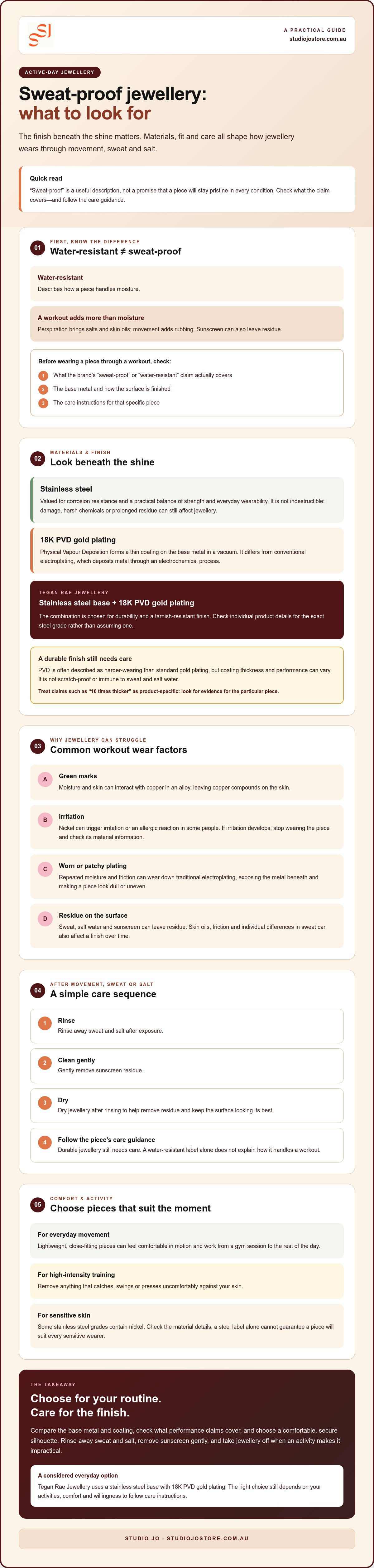
Sweat-proof jewellery is designed to better withstand regular contact with perspiration, skin oils and the friction that comes with movement. It’s a useful description, not a guarantee that a piece will stay pristine in every condition. Materials, coatings, fit and care all affect how jewellery wears over time.
Water-resistant and sweat-proof aren’t interchangeable. Water resistance describes how a piece handles moisture. Wearing it through a workout also exposes it to salty perspiration, skin oils, rubbing and sometimes sunscreen. Before buying, check what the brand’s claim covers, what the base metal is and how the surface is finished. Tegan Rae Jewellery uses a stainless steel base with 18K PVD gold plating, chosen for durability and a tarnish-resistant finish.
These details matter when an active day might involve heat, a workout, a swim and sunscreen. Rather than treating jewellery as indestructible, choose pieces that suit your routine and follow their care guidance. That makes sweat proof jewellery for active lifestyle dressing a practical choice, not a reason to wear every piece through every activity.
Why Regular Jewellery Fails the Workout Test
Green marks can appear when moisture and skin interact with copper in an alloy, leaving copper compounds on the skin. Nickel is a different concern: it can trigger irritation or an allergic reaction in some people. If earrings become uncomfortable during exercise, check the material information and stop wearing them if irritation develops.
Repeated moisture and friction can also wear down traditional electroplating, exposing the metal beneath and making a piece look patchy or dull. Sweat, salt water and sunscreen can leave residue, so even jewellery that looks lovely at first may need regular upkeep. For material context, surgical stainless steel is used in biomedical applications. Check a jewellery brand’s own specifications rather than assuming it uses a particular steel grade.
The Rise of the Active Coastal Aesthetic
There’s a simple appeal to going from a gym session to a coffee without changing every accessory. Lightweight, close-fitting everyday pieces can feel comfortable in motion and bring a considered finish to the rest of the day. For high-intensity training, remove anything that catches, swings or presses uncomfortably against your skin.
The active coastal aesthetic is less about wearing jewellery everywhere and more about choosing versatile pieces that don’t require delicate handling at every turn. With a little care after sweat or salt exposure, durable jewellery can support a simple everyday rotation, from an ocean swim to golden-hour drinks.
The Science of Non-Tarnish Materials: Why Metals Matter
A piece’s performance depends on both its base metal and any surface coating. Sweat isn’t simply water: it contains salts, and its composition can vary between people and situations. Combined with skin oils, friction and sunscreen, that residue can affect a finish over time. A “water-resistant” label alone doesn’t tell you how a piece will handle regular workouts.
Stainless steel is valued for its corrosion resistance, while 18K PVD gold plating gives it a gold-toned surface designed for durability. Tegan Rae Jewellery uses a stainless steel base with 18K PVD gold plating. Check individual product details for the exact steel grade rather than assuming a particular grade is used.
PVD Coating vs. Traditional Gold Plating
Physical Vapour Deposition applies a coating in a vacuum, using vapourised material to form a thin layer on the base metal. It differs from conventional electroplating, which deposits metal through an electrochemical process. PVD is used for gold-coloured finishes designed to be durable, although wear depends on the piece and how it’s cared for.
PVD is often described as harder-wearing than standard gold plating, but coating thickness and performance can vary. Claims such as “10 times thicker” need product-specific evidence. A durable finish may better resist everyday abrasion, but it isn’t scratch-proof or immune to sweat and salt water. Rinsing and drying jewellery after exposure can help remove residue and keep the surface looking its best.
Stainless Steel: A Practical Base for Active Days
Stainless steel resists corrosion because of its composition and protective surface layer. That doesn’t make it indestructible: damage, harsh chemicals or prolonged exposure to residue can still affect jewellery. Steel can offer a practical balance of strength and everyday wearability, but the weight depends on each piece’s design and construction.
Some stainless steel grades contain nickel, so the label alone can’t guarantee a piece will suit every sensitive wearer. If you’ve reacted to jewellery before, check the material information and consider advice from a health professional. For a deeper look at the material, read this guide to stainless steel jewellery in Australia.
For an everyday rotation, you can also explore stainless steel jewellery and compare the stated materials and finishes. The best choice is one that suits your skin, your routine and the level of care you’re happy to give it.
Managing Sun, Salt, and Sweat: A Holistic Approach
During an active day, jewellery can come into contact with perspiration, salt water and sunscreen in quick succession. Sweat leaves salts and skin oils on metal, salt water can leave residue as it dries, and sunscreen may collect around chains, settings and textured surfaces. Even durable, tarnish-resistant jewellery benefits from simple care. “Water-resistant” doesn’t mean unaffected by every product or condition.
Build a routine around both your skin and your accessories. Apply sunscreen before putting on jewellery, let it settle, and try to keep it off your pieces. This is practical whichever sunscreen you use. Mineral formulas containing zinc can leave a visible film too, so they aren’t automatically jewellery-safe. Avocado Zinc is one of the curated sun-care options available through Studio Jo, but sunscreen should not be treated as a protective coating for jewellery.
Sunscreen and Jewellery: What You Need to Know
Sunscreen formulations vary. Residue from mineral or other formulas can dull the appearance of jewellery or collect around detailed surfaces. Rather than assuming a particular filter will damage or protect your finish, follow these simple steps:
- Apply sunscreen to clean, dry skin before adding jewellery.
- Let it settle, then put on your pieces and avoid rubbing product directly onto them.
- If sunscreen gets on jewellery, clean it gently according to the care guidance for that piece.
A physical zinc barrier is designed to help protect skin from the sun; it doesn’t shield jewellery from sweat, salt or product residue. Avocado Zinc can be part of your sun-care routine, alongside thoughtful jewellery care.
Kind Bod and Your Post-Workout Routine
After a workout, swim or hot day outside, take a moment to care for your skin and jewellery. Remove your pieces before showering or cleaning them, then rinse away salt and sweat with fresh water. Dry them thoroughly with a soft, clean cloth before storing them. Avoid abrasive cloths and harsh cleaners unless the jewellery’s care instructions specifically recommend them.
That small reset can be part of winding down: rinse, dry, put your jewellery somewhere clean, then return to your post-exercise routine. Kind Bod products are another part of Studio Jo’s curated lifestyle range. Keep jewellery care simple and follow the instructions for each piece.
For sweat proof jewellery for active lifestyle routines, the aim isn’t to leave every piece on through every activity. Choose durable materials, limit unnecessary exposure to residue and care for jewellery consistently. Explore Tegan Rae jewellery as you build a rotation for days that move from exercise to the coast and on to golden hour.
How to Choose and Style Your Workout-Ready Pieces
For training, comfort and security matter as much as the finish. A close-fitting earring or short, flat chain is less likely to swing or catch than a long pendant or large hoop, but no style is automatically safe for every activity. Contact sport, weights, equipment and class rules can all affect what’s practical. If a piece could snag, press into your skin or get in the way, take it off before you start.
Try a simple snag test before wearing jewellery to a session. Check whether it moves freely, catches on clothing or hair, or has edges that could hook onto equipment. Also check that clasps close properly and that the piece feels comfortable when you move. This gives you a practical starting point for building sweat proof jewellery for active lifestyle routines that suit both your movement and personal style.
Secure Clasps and Practical Silhouettes
Huggies that close securely and sit close to the ear can be more practical than dangling earrings. A flat-link chain is less likely to swing than a long, loose necklace. Check that clasps close properly before you head out; a lobster clasp or clicking huggie still needs to fit comfortably and be in good condition. Choose pendants that sit securely, and skip anything that bounces or catches during high-impact movement.
“Set and forget” can describe an easy everyday routine, but it shouldn’t mean wearing jewellery around the clock or through every sport. Remove pieces when they’re uncomfortable, could snag or aren’t permitted for the activity.
Layering for an Active Lifestyle
Layering works best when each chain has room to move without crossing or twisting around the others. Start with two different lengths, then vary the texture, such as pairing a smooth snake chain with a fine link. Keep layers close to the body for low-impact plans. For running or high-intensity training, fewer pieces are often more comfortable. Explore ideas for durable everyday gold chains when planning a versatile rotation.
A personal detail can make a small piece feel like part of your routine. A zodiac charm, symbolic pendant or angel-number design might remind you of an intention you’ve set for a challenging session. Keep it secure and unobtrusive, or take it off for training if it moves too much. A thoughtful stack doesn’t need to be elaborate to feel like you.
Choose pieces that suit your actual workouts, then consider what you’ll be doing for the rest of the day. Explore Tegan Rae jewellery for gold-toned styles designed for everyday wear, from active mornings to golden-hour plans.
The Tegan Rae Promise: Quality for Sun-Soaked Days
Studio Jo is transitioning its focus to Tegan Rae Jewellery, with an emphasis on intentional jewellery for everyday life. The collection has a coastal feel, with pieces intended to carry through active mornings and salty afternoons to golden-hour drinks. For anyone seeking sweat proof jewellery for active lifestyle routines, the goal is not to never take jewellery off. It’s to choose materials and styles suited to the way you live.
Tegan Rae jewellery has a stainless steel base and 18K PVD gold plating, a combination chosen for durability and a tarnish-resistant finish. “Tarnish-resistant” and “water-resistant” describe the material focus, not a reason to skip care. Rinsing away salt and sweat and following the care guidance for each piece can help maintain its appearance over time.
Choose for Everyday Wear and Care
Choosing durable materials can help you build a jewellery collection around pieces you reach for often, rather than repeatedly replacing items that don’t suit your routine. Stainless steel with PVD gold plating offers a practical option for everyday wear, though no finish is immune to all wear or damage. Longevity depends on both the materials and sensible care.
Tegan Rae’s range includes feminine staples and meaningful designs inspired by love, angel numbers and the zodiac. Instead of choosing a piece for a single trend, look for versatile shapes and finishes that work with what you already wear. That’s a considered way to build your own rotation, whether the day calls for exercise, a coastal walk or a relaxed catch-up.
Your Next Steps to a Tarnish-Resistant Rotation
Start with pieces that suit your routine. Comfortable everyday earrings and a simple necklace can form the foundation of an active wardrobe; add another piece only if it suits your movement and feels easy to care for. Check the stated materials, choose secure and comfortable silhouettes, and take jewellery off for activities where it might snag or get in the way.
Studio Jo’s transition to Tegan Rae brings its focus to the jewellery line, while the store’s curated lifestyle range also includes sun care and wellness products. To learn more about choosing everyday pieces, read the waterproof jewellery Australia guide. Build a personal rotation around styles you enjoy, materials you’ve checked and care habits you can maintain.
Make Your Everyday Jewellery Work Harder
Your active-day jewellery should suit your routine, not require delicate handling at every turn. Look beyond “waterproof” labels: check the stated materials and finish, choose comfortable pieces that won’t snag during exercise, and rinse away sweat or salt after wear.
For a sweat proof jewellery for active lifestyle routine, Tegan Rae’s stainless steel base and 18K PVD gold plating offer a considered option for everyday styling. Durable doesn’t mean indestructible, so thoughtful care still matters.
Ready to find pieces that feel at home from ocean swims to golden-hour plans? Explore Tegan Rae’s water-resistant jewellery and choose styles that suit your everyday routine.
Frequently Asked Questions
Can I really wear my jewellery while swimming in the ocean and sweating at the gym?
Some jewellery is designed to handle water and everyday activity, but check the care guidance for the specific piece before swimming or exercising in it. Salt, sweat and friction can leave residue or affect a finish over time, and “water-resistant” doesn’t mean indestructible. Remove jewellery for contact sport or any workout where it could snag, catch on equipment or feel uncomfortable. Rinse and dry it after saltwater exposure.
What makes jewellery ‘sweat-proof’ compared to just ‘water-resistant’?
“Sweat-proof” suggests a piece is intended to cope with perspiration and skin oils as well as moisture, while “water-resistant” refers more broadly to exposure to water. Neither term alone tells you exactly how a piece will perform: construction, coating, fit and care all matter. Look for clear information about the base metal and finish, plus care instructions. Sweat and salt can leave deposits that plain water exposure may not.
Will sweat-proof gold jewellery turn my skin green?
Jewellery with a stainless steel base is less likely to leave green marks than pieces containing exposed copper alloys, but no general label can guarantee how your skin will react. Green staining can happen when copper compounds transfer to skin through moisture and contact. If you notice marks, irritation or discomfort, remove the piece and check its material details. Stop wearing it if your skin becomes irritated.
How do I clean my jewellery after a heavy workout or a day at the beach?
Rinse jewellery gently with fresh water to remove sweat or salt, then dry it thoroughly with a soft, clean cloth. Make sure clasps and crevices aren’t left damp before storing pieces. Avoid abrasive cleaners or harsh chemicals unless the care instructions for your jewellery recommend them. If sunscreen or body products have collected on a piece, clean it gently rather than scrubbing, which could wear the finish.
Is PVD gold coating better than traditional gold plating for an active lifestyle?
PVD gold coating is often selected for its durability compared with conventional electroplating, making it a practical finish for jewellery worn regularly. However, performance depends on the coating and how the piece is used and cared for. PVD isn’t scratch-proof or immune to wear. Check the product description for the base metal and finish, and be cautious of broad claims about lifespan or coating thickness unless the brand provides supporting details.
Can I apply sunscreen while wearing my water-resistant jewellery?
It’s best to apply sunscreen before putting on jewellery and let it settle on your skin. Sunscreen residue, whether from a mineral or other formula, can collect on a piece and dull its appearance. Keep it off chains, settings and textured surfaces where possible. If product gets on your jewellery, follow its care instructions and clean it gently. Sunscreen protects your skin, not your jewellery’s finish.
What are the best types of earrings to wear while exercising?
For low-impact workouts, small, close-fitting earrings such as secure huggies or studs are generally less likely to swing or catch than large hoops and dangles. Check that fastenings are secure and comfortable before you start. For contact sport, high-impact training or activities involving equipment, remove earrings if they could snag, press into your skin or create a safety risk. Follow any rules set by your gym or sporting activity.
Is stainless steel jewellery safe for people with sensitive skin?
Stainless steel is commonly chosen for its durability and can suit many people with sensitive skin, but individual reactions vary. Some steel grades contain nickel, and the exact grade used in a piece matters. Check the product’s material information rather than assuming all stainless steel is identical. If you’ve had reactions to jewellery before, consider avoiding an uncertain material and ask a health professional for advice if irritation occurs.